Divorce Lawyer in Delhi
Clear legal guidance and representation for divorce proceedings, from the first consultation through the appropriate court process.
Divorce Lawyer in Delhi
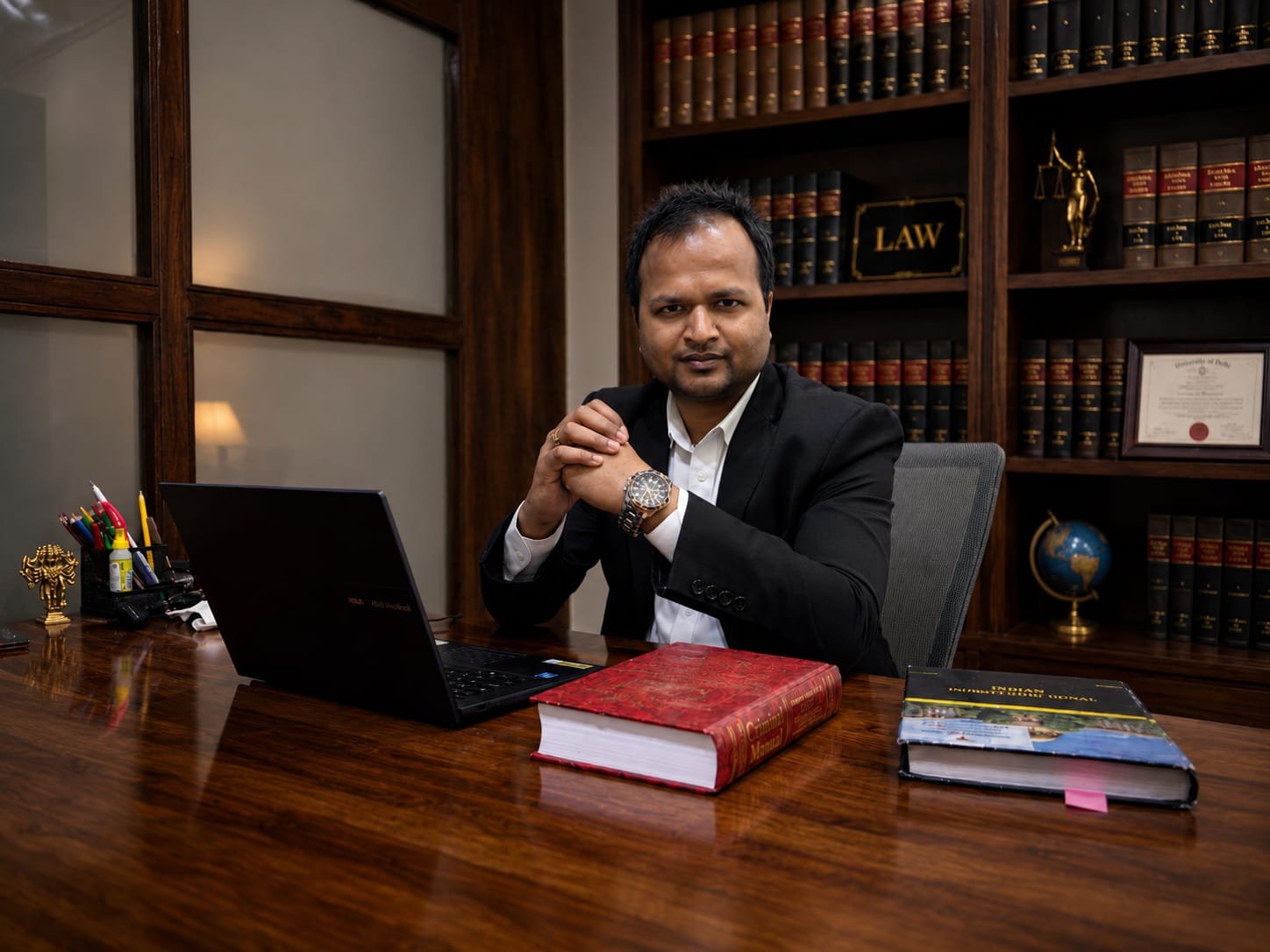
Advocate Shashi Ranjan Singh is a Delhi-based advocate practising matrimonial and divorce law since 2015, with experience handling more than 500 matrimonial matters. The practice covers divorce proceedings and connected matrimonial issues before appropriate courts in Delhi, subject to jurisdiction. The practice is based at Jungpura Extension, New Delhi, and handles appropriate matters before the Delhi High Court and Delhi district courts, subject to jurisdiction. The practice includes mutual consent divorce, contested divorce and connected issues such as maintenance, alimony, child custody, visitation and other matrimonial proceedings.
The practice also considers suitable divorce and matrimonial matters connected with Ghaziabad, Noida, Greater Noida and Faridabad. The office is in Jungpura Extension, New Delhi; the appropriate court and jurisdiction depend on the parties’ circumstances, residence history and case facts.
If you are looking for a divorce lawyer in Delhi, the relevant question is not simply a lawyer’s ranking or a search label such as “best divorce lawyer in Delhi”. It is whether the advocate’s experience, court practice and approach match the facts and procedural needs of your matter. For matters connected with Gurugram, see the Divorce Lawyer in Gurugram page.
Divorce matters are fact-specific. See the Divorce Law in Delhi guide for the broader legal framework, the Contested Divorce in Delhi page for disputed proceedings, and the Mutual Consent Divorce in Delhi guide for consent-based proceedings. The appropriate legal route depends on the marriage law that applies, the circumstances of the parties, whether both spouses agree to the divorce, and any connected financial, child-related or criminal proceedings.
For related information, see the matrimonial law in Delhi guide, the matrimonial lawyer in Delhi page, the contested divorce in Delhi guide, the mutual consent divorce in Delhi guide and the Delhi courts for divorce and matrimonial matters guide.
Divorce matters handled in Delhi
- Mutual consent divorce
- Contested divorce
- Maintenance and alimony
- Child custody and visitation
- Matrimonial disputes and family-law issues
Mutual consent or contested divorce?
Where spouses have reached a genuine agreement and the statutory requirements are satisfied, a mutual consent route may be available. Where the parties disagree about divorce or material issues, a contested proceeding may be required. A case can also involve settlement discussions after litigation has started.
Divorce Procedure in Delhi: What to Expect
The procedure depends on whether the matter proceeds by mutual consent or as a contested divorce, and on the marriage law and jurisdiction that apply. A consultation should establish the appropriate court, legal route, documents and connected proceedings before filing.
Mutual consent divorce under Section 13B
For a Hindu marriage to which Section 13B of the Hindu Marriage Act applies, spouses may seek divorce by mutual consent when the statutory requirements are satisfied. The process generally involves preparing the joint petition, the first motion, the statutory period applicable to the second motion, and the second motion before the court. The statutory waiting period may be waived in appropriate cases where the legal requirements for waiver are satisfied; it is not automatic.
Contested divorce
A contested divorce proceeds when the parties do not have the agreement required for a mutual-consent petition or when a dispute requires adjudication. The case may involve pleadings, responses, interim applications, evidence, cross-examination where applicable, arguments and judgment. The exact sequence varies with the case.
Which Delhi court?
Jurisdiction is fact-specific. Depending on the parties, marriage, residence and other statutory requirements, a matrimonial matter may fall before the appropriate Family or District Court, including courts at Saket, Tis Hazari, Rohini, Dwarka, Karkardooma or Patiala House, or before the Delhi High Court where its jurisdiction is attracted. The court cannot be selected simply because it is convenient; the legally applicable jurisdiction must be established.
Documents commonly needed
- Marriage certificate or other proof of marriage.
- Identity and address documents of the parties, where required.
- Photographs and marriage-related documents, where applicable.
- Documents relating to children and present custody arrangements, if relevant.
- Income, employment and financial documents where maintenance or settlement is involved.
- Relevant notices, complaints, FIRs, prior orders or other connected case papers.
- Important communications and other evidence relevant to the pleaded facts.
Timeline and costs
There is no single fixed timeline or fee for every Delhi divorce matter. Mutual-consent cases and contested proceedings can take materially different periods, while court scheduling, pleadings, evidence, settlement and interim applications can affect duration. Professional fees also depend on the nature and complexity of the matter. Ask for the fee structure and expected stages before engagement rather than relying on a generic advertised figure.
First-consultation checklist
- Write a one-page chronology of the marriage and major events.
- State whether both spouses presently agree to divorce.
- List children, current custody and visitation arrangements.
- Collect existing court papers, notices, FIRs or complaints.
- Prepare basic information about income, assets, liabilities and maintenance issues.
- Identify the outcome you are seeking and any urgent issue requiring interim relief.
Divorce Lawyer in Delhi for Mutual Consent and Contested Matters
The practice provides legal assistance across the main forms of divorce work that arise in Delhi, including mutual consent divorce, contested divorce and connected matrimonial proceedings. The appropriate approach depends on the governing marriage law, the facts, the available evidence and the court with jurisdiction.
Mutual consent divorce
Where the statutory requirements are satisfied and both spouses agree, a mutual consent proceeding may be available. Legal work can include reviewing the proposed settlement, preparing the petition and supporting documents, and guiding the parties through the applicable court procedure.
Contested divorce
Where the spouses do not agree or a dispute requires adjudication, the matter may proceed as a contested divorce. The case can involve identifying legally available grounds, preparing pleadings, responding to the other side, addressing interim applications and presenting evidence as the matter progresses.
Connected matrimonial issues
A divorce dispute may also require attention to maintenance, alimony, child custody, visitation, settlement or other proceedings arising from the same factual background. These issues should be assessed together where appropriate, while keeping the legal requirements of each proceeding distinct.
What a divorce lawyer in Delhi can assist with
The legal work in a divorce matter can extend beyond obtaining a decree. Depending on the facts, a divorce lawyer may need to address the main matrimonial proceeding together with financial, child-related, settlement or connected litigation issues.
- Mutual consent divorce: advice on the legal requirements, settlement terms, documents and court procedure.
- Contested divorce: assessment of the available grounds, pleadings, evidence, responses and court proceedings.
- Maintenance and alimony: preparation or response to financial claims and connected disclosure issues.
- Child custody and visitation: advice concerning custody arrangements and applications connected with the welfare of children.
- Settlement and mediation: legal assistance in evaluating settlement terms and participating in appropriate mediation or negotiation.
- Connected proceedings: coordination of matrimonial issues with other proceedings where they arise from the same dispute.
The exact strategy depends on the applicable marriage law, facts, evidence, jurisdiction and the relief sought. A lawyer should assess those factors before recommending a particular course.
Choosing the Right Divorce Route in Delhi
When someone searches for a divorce lawyer in Delhi, the first practical question is usually whether the matter is suitable for mutual consent or requires a contested proceeding. That depends on the facts, the governing marriage law, the parties’ present position and the issues that remain unresolved.
- If both spouses agree: the matter may proceed through the applicable mutual-consent procedure, subject to statutory requirements and the court having jurisdiction.
- If the spouses disagree: a contested divorce may require legally available grounds, pleadings, evidence and adjudication.
- If children or finances are involved: custody, visitation, maintenance, alimony or settlement terms may need separate legal consideration.
- If other proceedings exist: matrimonial, criminal or other connected proceedings should be reviewed together where appropriate.
The phrase “best divorce lawyer in Delhi” is a search term rather than a legal qualification. A more useful comparison is the advocate’s experience with the type of proceeding, familiarity with the relevant court and ability to explain the procedure and documents without promising a particular result.
How to assess a divorce lawyer in Delhi
People searching for the best divorce lawyer in Delhi can compare relevant matrimonial experience, familiarity with the court where the matter may be heard, experience with the specific type of divorce, clarity about procedure and documents, communication practices and the handling of connected issues such as maintenance or custody. A search phrase such as “best divorce lawyer in Delhi” is not a substitute for assessing an advocate’s actual experience and the requirements of the case, and no particular result can be guaranteed.
For a practical document checklist, use the first-consultation checklist above. The supporting guides cover mutual consent divorce and contested divorce in greater detail.
What to consider before starting a divorce proceeding
Before filing or responding to a divorce proceeding, it is useful to identify the governing marriage law, the legally available grounds or consent route, the appropriate jurisdiction and any connected proceedings. A clear chronology of important events and an organised set of documents can make the initial legal assessment more efficient.
Questions to organise
- Is the divorce proposed by mutual consent or is it contested?
- Are there children and, if so, what are the present custody and visitation arrangements?
- Are maintenance, alimony or financial disclosure issues involved?
- Are there existing matrimonial, criminal or domestic-violence proceedings?
- Which documents and evidence are available to support the relevant facts?
Delhi courts
Depending on jurisdiction and the nature of the proceeding, matrimonial matters may come before the appropriate Family Court or District Court and, in suitable matters, the Delhi High Court. Practice includes the Delhi High Court and district courts at Saket, Tis Hazari, Rohini, Dwarka, Karkardooma and Patiala House, subject to jurisdiction.
Professional profile
Advocate Shashi Ranjan Singh completed his LL.B. from Lloyd Law College, and enrolled with the Bar Council of Delhi in 2015. His practice includes matrimonial matters as well as criminal litigation, bail and anticipatory bail.
Next step: Review the relevant legal information on this website or contact the office for information about a specific matter. You can also call +91 97167 75660 for an office enquiry. No outcome can be guaranteed.
Frequently Asked Questions
What type of divorce matters do you handle in Delhi?
The practice handles mutual consent and contested divorce matters, along with connected issues such as maintenance, child custody and related matrimonial proceedings, subject to the facts and applicable jurisdiction.
Which Delhi courts may hear a matrimonial matter?
The appropriate forum depends on the facts and applicable jurisdiction. Matters may arise before the Delhi High Court or appropriate Family and District Courts, including courts at Saket, Tis Hazari, Rohini, Dwarka, Karkardooma and Patiala House.
What should I bring to the first consultation?
Bring proof of marriage, a short chronology, existing notices or orders, relevant financial information and documents concerning children or connected proceedings where applicable.
Related legal pages: Matrimonial Lawyer in Delhi · Matrimonial Law in Delhi · Mutual Consent Divorce in Delhi · Contested Divorce in Delhi · Maintenance & Alimony · Child Custody · Legal Insights
Disclaimer: This page provides general legal information and is not legal advice. The law and procedure depend on the facts and applicable legislation. Using this website does not create an advocate-client relationship.
For office address and consultation details, see the contact page.
For further information, review the professional profile, practice areas and contact information.
Divorce practice resources: Mutual Consent Divorce in Delhi · Contested Divorce in Delhi · Maintenance & Alimony · Child Custody.
Practical guides: Divorce Process in Delhi · Documents for Contested Divorce · Contested Divorce Timeline · Mutual Consent Divorce Documents.